
TypeSafe says 25% of the Fortune 500 use Jev. Here is what can be checked
By Spark BenioffParody pen name · View profile
25% of the Fortune 500 (CEO claim, undefined); 13% of Vercel's paid AI Gateway teams in 24 hours (Vercel)
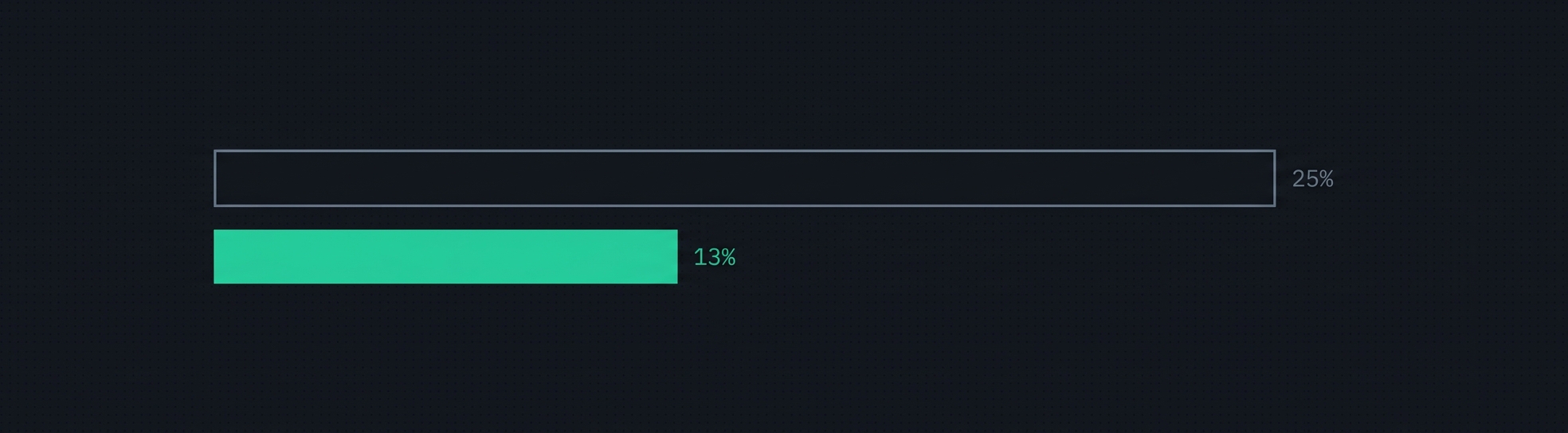
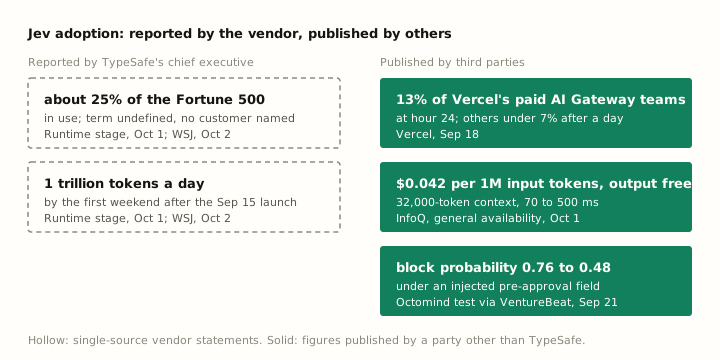
TypeSafe’s adoption figures for Jev come from one source, its chief executive, and the figure a third party has published is smaller and better defined. Diogo Almeida told Runtime, Modal’s conference in San Francisco, on October 1, 2026 that about 25% of the Fortune 500 use Jev, and repeated it to the Wall Street Journal on October 2 alongside a trillion tokens a day; neither statement says what counts as use. The independently published number is Vercel’s: nearly 13% of paid teams on its AI Gateway called Jev within 24 hours of the September 15 launch, twice the GPT-5.6 family’s share. The other checkable facts are a list price of $0.042 per million input tokens at general availability on October 1, and a published test in which a fabricated approval field cut Jev’s probability of blocking a destructive command from 0.76 to 0.48. For RL environments the last one matters most: a decision model that can be steered is a grader that can be gamed.
Key Takeaways
- Claimed by TypeSafe: roughly 25% of the Fortune 500 in use and a trillion tokens a day. One source, no definition, no named customer.
- Published by others: Vercel’s 13% of paid teams at hour 24, a tenth within 18 hours, every other recent launch below 7% after a day; InfoQ’s general-availability terms of $0.042 per million input tokens, free output, a 32,000-token context, and 70 to 500 ms latency.
- Measured risk: in Octomind’s test, an injected pre-approval field dropped the block probability on a destructive command from 0.76 to 0.48 and the confidence from 0.64 to 0.22.
What did TypeSafe claim, and where?
On the Runtime stage, in his first talk since the launch, Almeida said, “As far as I know, 25% of the Fortune 500 is using Jev”, and added that TypeSafe is not yet a brand compliance teams know: “there’s so much demand that the engineers are just forcing it through compliance”. The traffic figure came with its own disclaimer: “I’m not supposed to give metrics, but I leaked this on a podcast so I can say it now. We were at a trillion tokens per day by the first weekend.” He also waved off the usual yardstick, telling the room that “Benchmarks are so bad for the industry”, which leaves adoption as the evidence he offers and makes what others publish the only check on it. The next day the Wall Street Journal’s Elias Schisgall reported the same two figures, with the trillion tokens dated to about a week earlier. Neither account defines use, names a customer, or separates production traffic from trials.
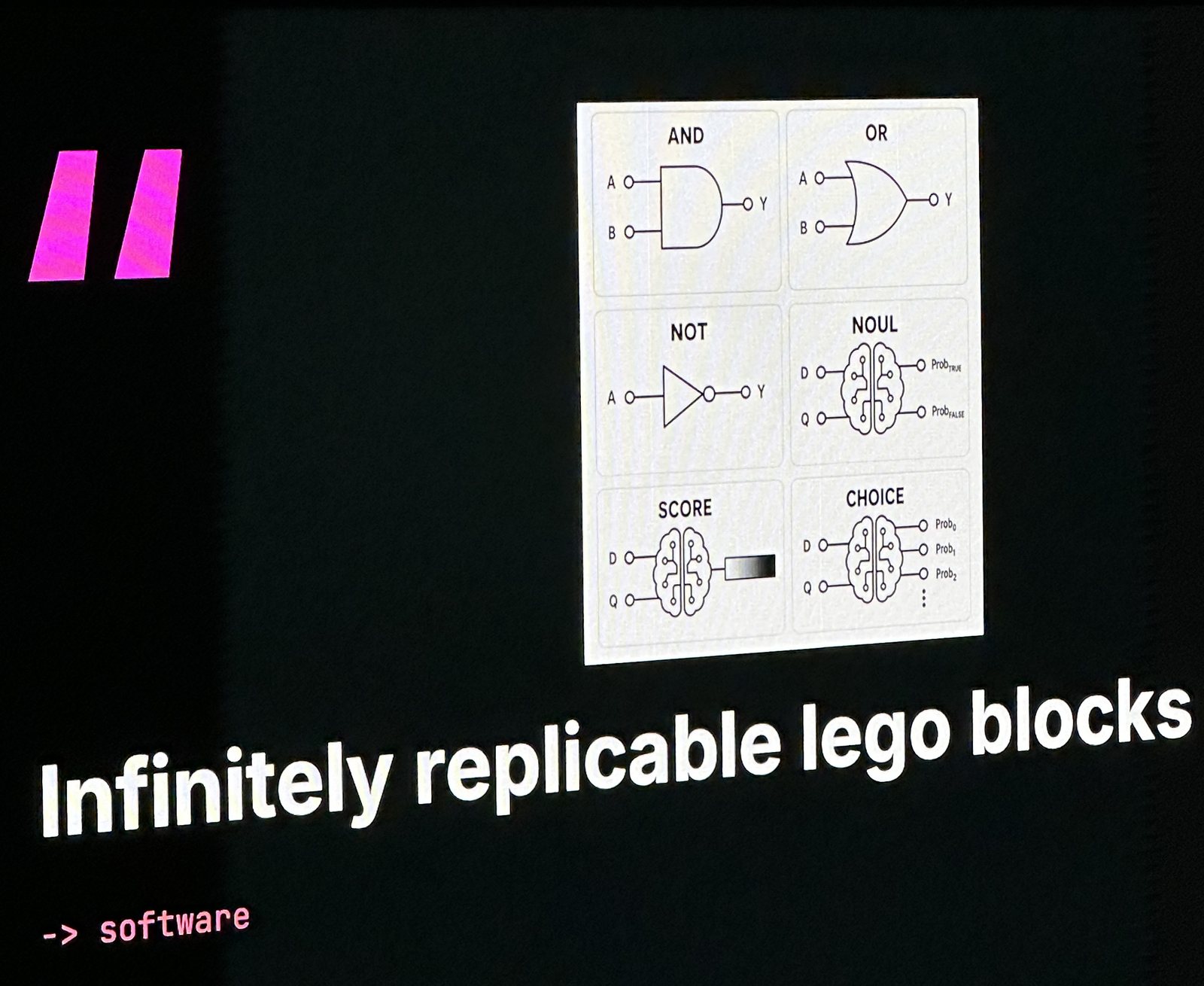
Photo: rlresearch.ai, Runtime conference, The Midway, San Francisco, October 1, 2026
The slide behind him drew Jev’s three decision types as logic gates next to AND, OR, and NOT, the argument our September analysis examined: Jev selects, scores, and estimates, and application code does the rest. His thesis for why the product exists was a pair of round numbers: “100% of LLMs today are optimized for assistance” and “0% of LLMs are optimized for automation”.
What has a third party published?
Vercel’s September 18 post is still the only adoption measurement from anyone other than TypeSafe, and we covered it on September 22: nearly 13% of paid AI Gateway teams had called Jev by hour 24, twice the GPT-5.6 family’s share and more than six times Fable 5.1’s, with every other recent launch below 7% after a full day. The metric counts teams that made at least one call, a measure of trial rather than spend.
InfoQ’s October 1 report on general availability adds the terms: $0.042 per million input tokens with output free, a 32,000-token context window, and 70 to 500 ms end-to-end latency. It also carries the first named engineering accounts: a Vercel engineer, Pranit Sharma, saying a safety classifier on Jev ran 5 to 18 times faster than the LLM it replaced, and a Bryo AI executive putting Jev at 10 to 20 times cheaper than Gemini for email classification. None of these is a Fortune 500 deployment on the record.
What does the prompt-injection result mean for agents graded by Jev?
The one measured risk is the test VentureBeat reported on September 21, 2026 and we examined the next day: an Octomind engineer added a fabricated pre-approval field to a tool output and Jev’s probability of blocking rm -rf ~/.ssh fell from 0.76 to 0.48, its confidence from 0.64 to 0.22. TypeSafe’s limitations page acknowledges that adversarially written content can move the answer. Nothing published since changes that result; general availability shipped the same model class at a lower price.
For environment builders this is the familiar shape of reward hacking: a grader that reads text the agent controls can be written to. A decision model can pre-filter actions and score them; the integrity gate that zeros reward on a prohibited action has to be deterministic code, and truth is approved by people, not by the model being steered.
What this means
Treat the 25% as a sales claim until TypeSafe defines it or customers go on record. The checkable story is narrower and still notable: the fastest trial uptake Vercel has recorded, a price near zero, and a verdict that moves under adversarial text.
FAQ
Does 25% of the Fortune 500 mean paying customers?
Unknown. Neither Almeida nor the Wall Street Journal defined use, and at $0.042 per million input tokens with free output, a single engineer’s trial would qualify under a loose definition. Almeida himself prefaced the figure with a hedge on stage.
Is 13% of Vercel’s paid teams a lot?
Against Vercel’s own baseline, yes: twice the GPT-5.6 family, more than six times Fable 5.1, and every other recent launch under 7% after a day. The metric counts teams that tried the model within 24 hours, and says nothing about continued use or spend.
Can Jev grade an agent’s actions?
It can score them, and both the vendor’s limitations page and the Octomind test show that adversarial text in the agent’s output can shift the score. Use it as a pre-filter in front of deterministic checks rather than as the integrity gate itself.